
Can you make a church grow?
God gives the growth. So what is our part?

Can you make a church grow?
Who grows it?
Churches spend a lot of time thinking about how to grow. But what if our role isn’t to create growth, but to pay attention to what helps—or hinders—the life God has already given?
WATCH VIDEO: Can You Make a Church Grow?
A couple of days ago, in Rethink the Goal, I introduced this new season for NCD Canada by returning to something very basic: our purpose isn’t simply to build bigger churches. Our purpose is to worship God, follow Jesus, and grow in our love for God.
That raises questions:
Where does that kind of growth come from?
Can you make a church grow?
Who grows it?
We spend a lot of time in churches thinking about programmes, strategies and things we can do to grow the church. Those things can be important, but Scripture gives us an important perspective.
Paul writes in 1 Corinthians 3 about one person planting and another watering, “but God gave the growth.” Jesus gives us another picture in Mark 4:26–29. Someone scatters seed on the ground, sleeps and rises, night and day pass, and the seed sprouts and grows. Jesus says the person who scattered it “does not know how.” The earth produces “of itself.”
NCD claims this biblical picture as one of its core principles: the “all-by-itself” principle.
That doesn’t mean we do nothing. The person in Jesus’ parable scatters the seed and, when the time comes, gathers the harvest. Paul speaks of planting and watering. We participate—but we don’t create the life that makes growth possible.
If we believe that growth depends entirely on us, the obvious response when a church is struggling is to do more: another programme, initiative, or strategy. But what if we believe that growth comes from God? Then perhaps a better question is whether the environment we have created is helping that God-given life to really flourish—or is something getting in the way?
Someone may have gifts to offer but no clear opportunity to use them. A newcomer may want to belong but struggle to find a way into existing groups or relationships. A leader may want to equip others but finds it easier to do the work themselves. In each case, the answer may be paying attention to the conditions around the seeds that have already been sown.
Healthy churches don’t manufacture growth. They cultivate conditions in which God-given life can flourish.
The survey is one tool for helping us notice the health of the environment in which people worship, serve, relate and grow; but the Church Survey isn’t the goal.
There is a personal discipleship question here too. I cannot manufacture spiritual life in myself. But I can pay attention to what helps me respond to God—and what seems repeatedly to get in the way.
Faithful steps this week:
Notice one place where you see life in your church, your ministry or your own walk with God. Give thanks for it. Then ask: What has helped that?
You might also consider where something feels stuck. What might be in the way?
Invite someone to explore these questions with you. Forward this email, or invite them to subscribe
In the coming weeks we’ll continue to explore what our part might be in tending to healthier conditions.
Shane Watson
NCD Canada
The book that reminded me of the primary goal
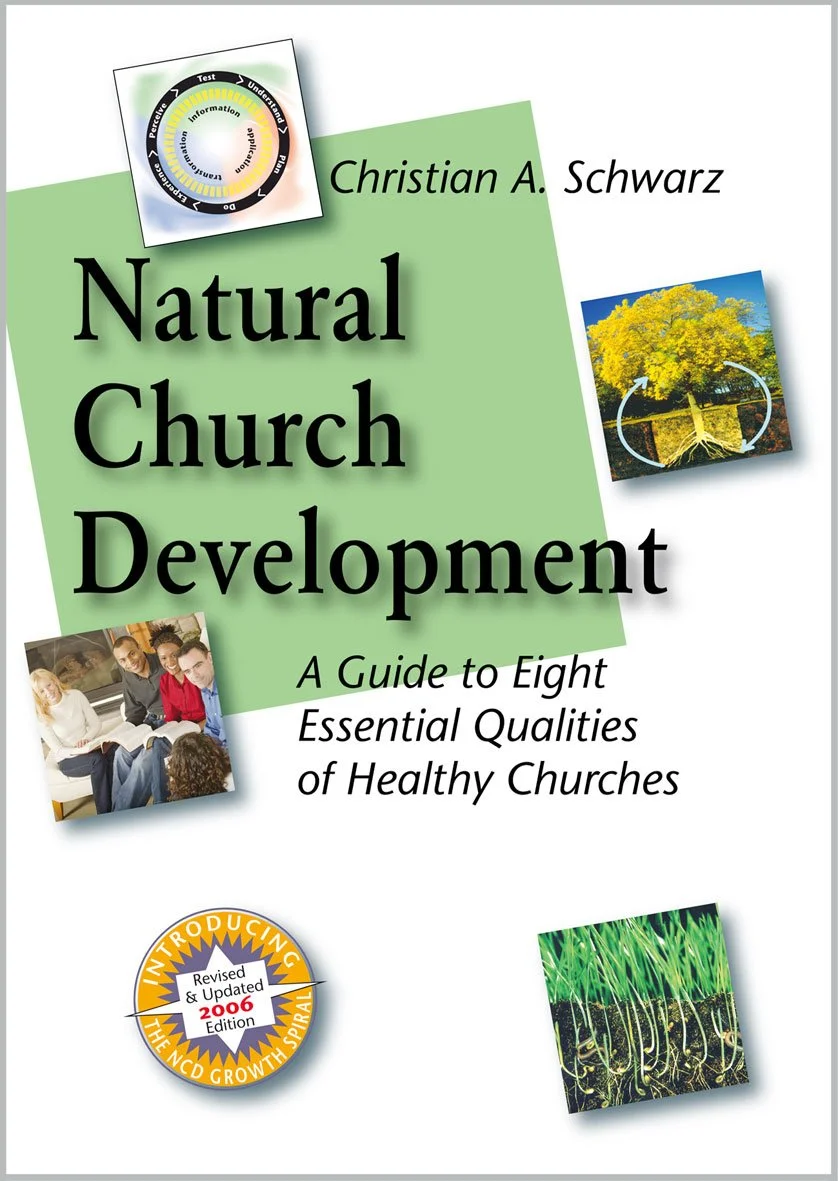
Natural Church Development
A book that rewrote the rules of church development. First published in 1996, it didn't only spark an intense international discussion, but also initiated processes of change in countless churches around the globe.